The Heartbeat of Music
Written music tells us two things: which notes to play and when to play them. Rhythm is the “when.” It is the heartbeat of music, the invisible framework that gives melody its shape and momentum.
A beautiful melody played with clumsy timing will sound wrong, even if every note is correct. A simple melody played with confident, steady rhythm will sound musical and alive. This is why rhythm deserves your full attention.
The good news is that you already have a sense of rhythm. You feel it when you tap your foot, clap along to a beat, or nod your head in the car. We are going to connect that instinct to the written symbols composers use.
The Beat
The beat is the steady pulse running underneath all music,the thing you tap your foot to. The speed of the beat is called tempo, measured in beats per minute (BPM). A tempo of 60 BPM means one beat per second. A tempo of 120 BPM is twice as fast.
The beat is the heartbeat of music. Every note you play either rides on it, stretches across it, or dances between its pulses.
Note Values
Each note shape tells you how long to hold it, measured in beats:
Whole note (open oval, no stem) = 4 beats
Half note (open oval with stem) = 2 beats
Quarter note (filled oval with stem) = 1 beat
Eighth note (filled oval, stem, one flag) = ½ beat
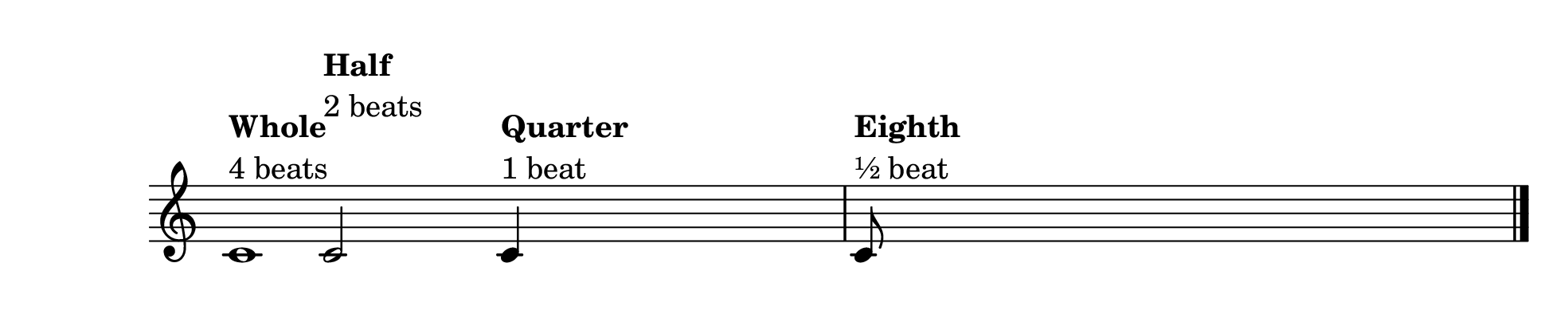
Each value is exactly half the duration of the one above it. A whole note = 2 half notes = 4 quarter notes = 8 eighth notes. This mathematical relationship is the backbone of all rhythmic notation.
Rests
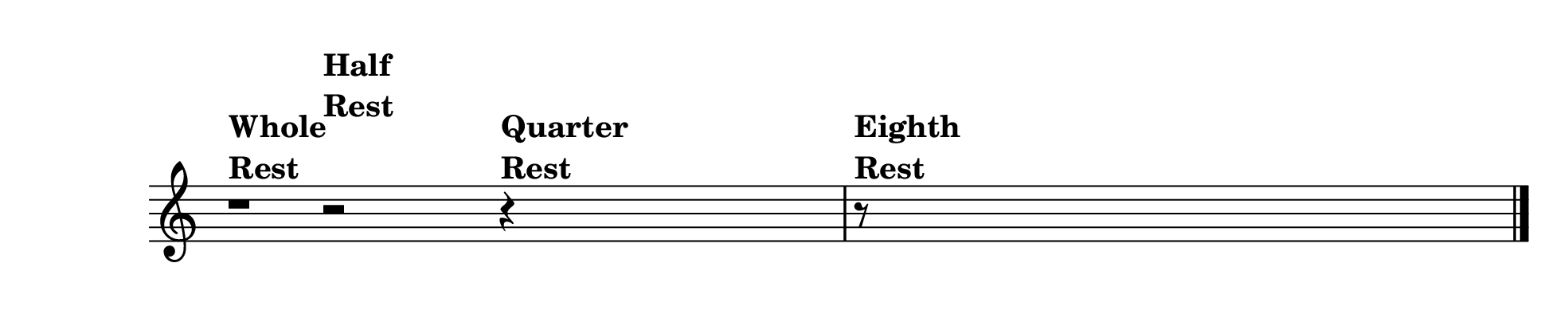
Silence is just as important as sound. For every note value, there is a corresponding rest that tells you to be silent for that same duration. A whole rest = 4 beats of silence. A quarter rest = 1 beat of silence.
Time Signatures
At the beginning of every piece, you will see two numbers stacked like a fraction. This is the time signature. The top number tells you how many beats are in each measure. The bottom number tells you which note value gets one beat.
4/4 time (four quarter-note beats per measure) is by far the most common,it is sometimes called “common time.” 3/4 time is the waltz: three beats per measure, with a strong ONE-two-three feel.
Try It: Feel the Difference
Count “1-2-3-4, 1-2-3-4” while tapping your hand. That is 4/4. Now count “1-2-3, 1-2-3” with a slight emphasis on 1. That is 3/4. The difference is subtle but powerful.
Syncopation
Syncopation is when the emphasis falls on an unexpected beat,between the main pulses rather than on them. It is what gives jazz, funk, and Latin music their groove. Instead of accenting beats 1 and 3, syncopation places the stress on the “and” between beats.
Try this: tap a steady beat with your left hand (1-2-3-4). Now with your right hand, tap on the “and” of each beat (the halfway point between taps). That off-beat pattern is syncopation, and it transforms straight rhythm into something that swings.
Developing Your Internal Pulse
The ultimate goal is to feel the beat so naturally that you do not need to count. This comes from practice,playing with a metronome, clapping rhythms before playing them, and simply spending time with music.
Start slow. A common mistake is practicing at a tempo that is too fast, which forces you to rush through difficult passages. Set your metronome to a comfortable speed where you can play every note accurately, then gradually increase the tempo over days and weeks.
Rhythm is not something you think about. It is something you feel. And the more you play, the more naturally it will come.