Beyond the Triad
You have spent the previous lessons building triads and moving them through progressions. That three-note foundation is solid and will carry you far. But there is more to harmony than three notes. If triads are the words of music, seventh chords are the poetry.
A seventh chord is a triad with one more note added: the seventh. That single note changes everything. Where a triad sounds clear and stable, a seventh chord sounds rich, complex, and often beautifully unresolved. It is the difference between a black-and-white photograph and the same scene in full color.
Types of Seventh Chords
There are four main types you will encounter, each with its own personality:
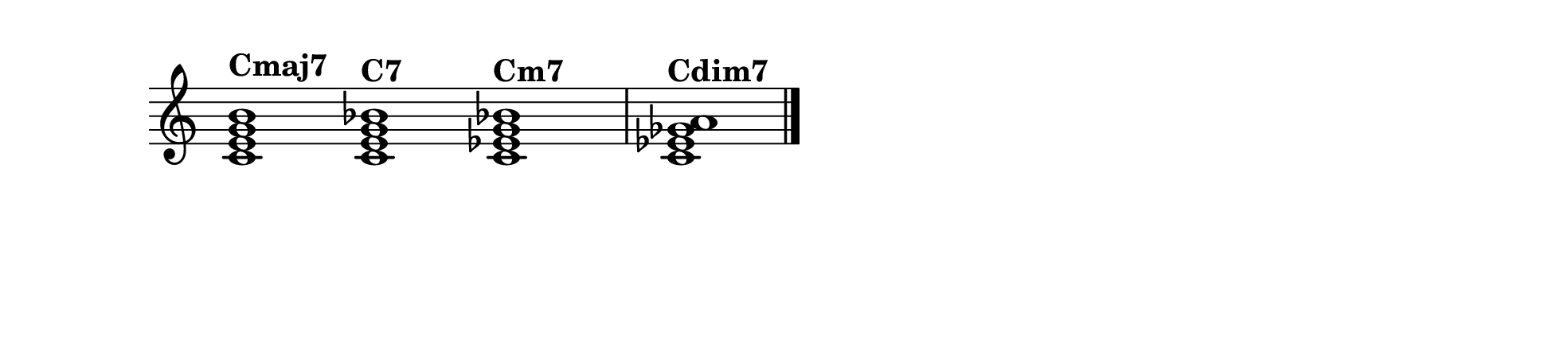
Major 7th (Cmaj7): C–E–G–B. Warm, lush, dreamy. The sound of bossa nova and smooth jazz.
Dominant 7th (C7): C–E–G–B♭. Bright but tense, it wants to resolve. The engine of blues and rock.
Minor 7th (Cm7): C–E♭–G–B♭. Mellow and introspective. The color of cool jazz and R&B.
Diminished 7th (Cdim7): C–E♭–G♭–B𝄫. Dark and suspenseful. Used for dramatic passing moments.
Try It: Hear the Difference
Play each seventh chord slowly: Cmaj7, then C7, then Cm7. Hold each one and listen. The root, third, and fifth are nearly the same,it is the seventh that transforms the color.
The ii–V–I with Seventh Chords
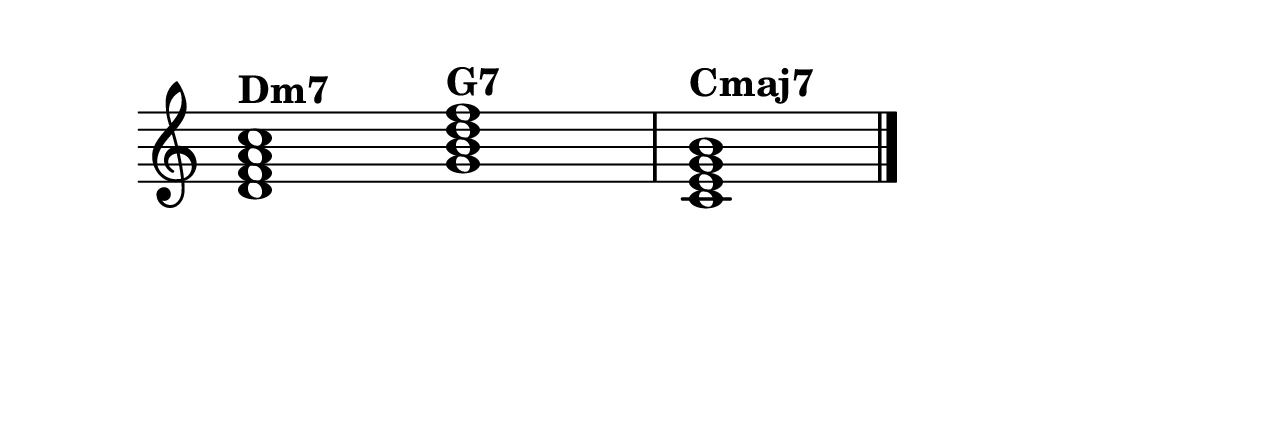
You already know the ii–V–I progression. In jazz, it is played with seventh chords: Dm7–G7–Cmaj7. This is the most important progression in jazz. Learn it in every key and you will have the skeleton of hundreds of jazz standards.
Voice Leading
Voice leading is the art of moving smoothly from one chord to the next. Instead of jumping your hand to a new position for each chord, you find the voicing where the fewest notes need to move,and the notes that do move go to the nearest available pitch.
Good voice leading makes chord changes sound effortless and connected. In the Dm7–G7–Cmaj7 progression, notice that many notes are shared or move by just a half step. That smooth motion is what gives jazz its silky harmonic flow.
Chord Substitutions
Jazz musicians love to substitute one chord for another that shares a similar function. The most famous substitution is the tritone substitution: replacing a dominant chord with another dominant chord whose root is a tritone away. For example, replacing G7 with D♭7.
This works because both chords share the same two most important notes (the third and seventh, just swapped). The result is a more colorful, chromatic bass line that adds sophistication to any progression.
Exercise: ii–V–I in Three Keys
Play the ii–V–I with seventh chords in C major (Dm7–G7–Cmaj7), F major (Gm7–C7–Fmaj7), and G major (Am7–D7–Gmaj7). Focus on smooth voice leading between chords.
Jazz harmony is not more complicated than classical harmony. It is simply more colorful. And now you have the palette to begin painting with it.